Hyperfiksaatio: ADHD & Autism Hyperfixation Guide 2026
Ever started playing a video game at 6 PM and looked up to realize it’s 3 AM? Your stomach’s growling, you’ve ignored three bathroom trips, and you still have energy to keep going. A friend recently described this exact scenario—she’d completely lost herself in a new creative project and forgotten the world existed.
Hyperfiksaatio (hyperfixation) refers to an intense, all-consuming focus on a specific activity, topic, or interest that makes everything else fade into the background. It’s particularly common in people with ADHD and autism, where attention regulation works differently than in neurotypical brains. Hyperfiksaatio can be both a superpower and a challenge, depending on how you manage it.
Here’s the critical distinction: a normal hobby is something you enjoy during free time and can put down when needed. Hyperfiksaatio is something that absorbs you completely, making it nearly impossible to shift focus.
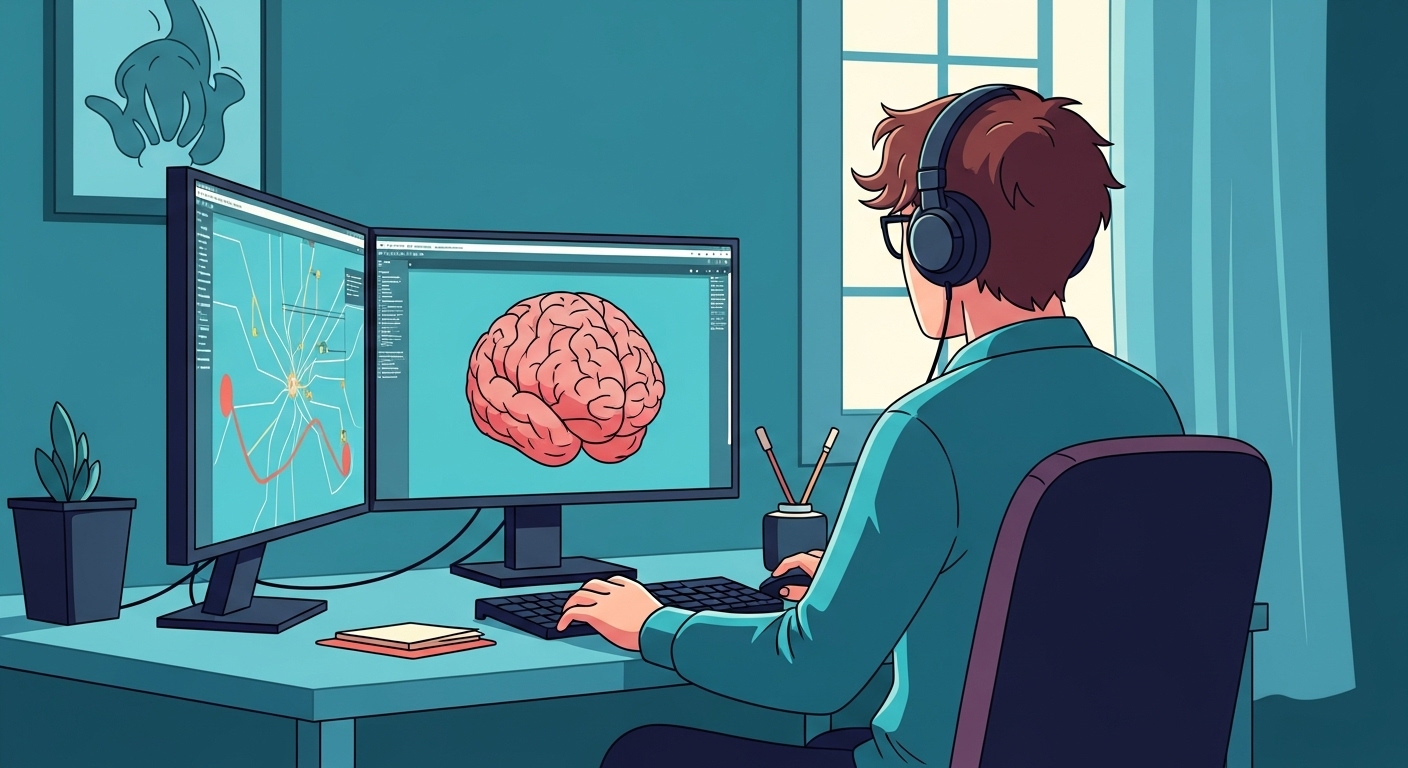
When hyperfiksaatio hits, time perception disappears entirely. You might sit at your computer for eight hours straight without breaks, forgetting to eat, drink, or sleep. Other responsibilities feel meaningless compared to whatever has captured your attention right now.
The neurobiological explanation centers on your brain’s reward system. In people with ADHD, dopamine regulation works differently—when an activity provides the right kind of stimulation, your brain latches onto it desperately. For those on the autism spectrum, hyperfiksaatio targets often bring comfort and predictability, serving as a way to regulate your nervous system and process sensory overload.
What’s fascinating is that this isn’t about willpower or discipline. It’s about how your brain is wired to seek and sustain attention.
How Hyperfiksaatio Shows Up in ADHD vs Autism
While both groups experience hyperfiksaatio, the phenomenon manifests slightly differently in each.
In ADHD, hyperfiksaatio tends to be shorter-lived but extremely intense. It might last anywhere from a few hours to a few weeks. This week’s obsession could be 3D modeling, next week’s something completely different. The focus shifts frequently, and once interest wanes, the previous hyperfiksaatio can feel completely irrelevant.
Studies show that approximately 50-70 percent of autistic individuals also have ADHD traits, so many people experience both patterns. This makes the distinction even trickier—the same person might have both long-term and shorter-duration hyperfiksaatio experiences.
In autism, hyperfiksaatio often manifests as long-term special interests. These can remain consistent for years or even decades. A child might become deeply engaged with trains, military history, or a specific animal species in a way that doesn’t change with age. As an adult, that same person might still feel profound connection to the same topic.
In both cases, hyperfiksaatio brings meaning to life. It’s not just a distraction—it’s how the brain naturally operates.
The Strengths Nobody Talks About
Media coverage often focuses on hyperfiksaatio’s challenges, but honestly, it can be a significant advantage in the right circumstances.
Rapid expertise development is one obvious benefit. When you immerse yourself in something with complete intensity, you learn fast. You develop skills that take others years to acquire. Many successful entrepreneurs, artists, researchers, and athletes describe getting absorbed in their work in ways that produce exceptional results.
Creative productivity flourishes during hyperfiksaatio periods. Deep engagement allows you to see connections that surface-level observation misses. The most innovative ideas often emerge when someone’s been working on a problem for days without interruption.
Identity strengthening is another underappreciated benefit. Hyperfiksaatio targets can form a significant part of who you are. They provide security and predictability in a world that can feel chaotic.
I’ve noticed that people with hyperfiksaatio often become the go-to experts in their chosen fields. That level of dedication and knowledge is genuinely impressive.
The Real Challenges in Daily Life
To be honest, hyperfiksaatio causes genuine problems when it controls your life instead of being managed by you.
Neglecting basic needs is common. I’ve heard countless stories from people who’ve forgotten to eat for an entire day, skipped multiple nights of sleep, or postponed showering for… three days. This isn’t healthy long-term.
Relationships suffer when partners or friends feel like they’re “second place” to your hyperfiksaatio target. Conversations constantly circle back to the same topic, and other people’s needs can go unnoticed.
School and work can struggle in two ways. Either hyperfiksaatio doesn’t target them—meaning necessary tasks go undone—or it targets them too intensely, leading to burnout. Finding balance is genuinely difficult.
Switching between tasks becomes actual torture. When you’re fully absorbed in something, interruption feels physically unpleasant. This makes daily routines more challenging than they need to be.
Common Mistakes People Make with Hyperfiksaatio
I’ve observed certain patterns in how people handle their hyperfiksaatio—both helpful and harmful approaches.
Suppressing hyperfiksaatio completely is the first mistake. When you forcefully try to stop an intense interest, it often just strengthens. Plus, you lose the positive side—expertise development and joy.
Trying to consciously choose hyperfiksaatio targets rarely works. You can’t trick yourself into fixating on something that doesn’t genuinely grab your attention. Hyperfiksaatio emerges from authentic interest, not on demand. However, you can explore connections to useful topics and potentially guide it that way.
Blaming others for not understanding doesn’t solve problems. While hyperfiksaatio is a neurological phenomenon, it’s your responsibility to communicate your needs to loved ones. They can’t read your mind.
Ignoring warning signs until crisis hits is surprisingly common. If you’re regularly missing meals, destroying your sleep schedule, or abandoning all other responsibilities, that’s a problem requiring active management.
Practical Strategies for Managing Hyperfiksaatio
Living with hyperfiksaatio requires intentional approaches, not fighting against how your brain works.
Build “diving windows” into your day. For example, 90-minute work cycles followed by 15-minute maintenance breaks. This gives hyperfiksaatio controlled space to operate. Set phone alarms—otherwise you definitely won’t remember to take breaks.
Conscious pausing works better than constantly fighting resistance. Notice a signal (timer, app, pet reminder) and ask yourself: “Do I need a break, water, or to switch tasks?” This simple ritual can prevent hours from disappearing unnoticed.
Chunking and prioritizing are essential. Make your daily to-do list no more than three main tasks. For hyperfiksaatio-prone people, long task lists are disasters—you’ll never complete them all, and the result is guilt.
Deliberately channel hyperfiksaatio into strengths. If your hyperfiksaatio is music, can it become a course, social media project, or income source? If it’s research, can you write about it? Transform the intensity into something productive when possible.
Use accountability partners strategically. Someone who can gently remind you to eat lunch or check whether you’ve moved from your desk in four hours. External structure helps when internal regulation struggles.
When Hyperfiksaatio Becomes a Problem
Not all hyperfiksaatio is harmless enthusiasm. Sometimes it crosses into territory requiring professional help.
If hyperfiksaatio consistently interferes with sleep, nutrition, hygiene, or basic health maintenance, that’s a red flag. Your body has non-negotiable needs that can’t be indefinitely ignored.
When relationships repeatedly suffer despite your attempts to balance things, therapy can help develop better communication and boundary-setting skills. Cognitive behavioral therapy particularly helps recognize and modify fixation patterns.
If hyperfiksaatio feels compulsive rather than enjoyable—like you must engage with it even when you’d rather not—that might indicate OCD or anxiety components requiring treatment.
Medication can help some people with ADHD regulate attention more effectively. Stimulant medications commonly used for ADHD treatment can reduce hyperfixation intensity while improving ability to redirect focus when necessary.
Hyperfiksaatio vs Special Interests vs Hyperfocus
These terms get used interchangeably, but they refer to distinct experiences worth understanding.
Special interests are enduring passions primarily discussed in autism contexts. They provide joy, purpose, and identity over extended periods—sometimes a lifetime. An autistic person might develop encyclopedic knowledge about trains, coding, historical events, or art and maintain that interest for years.
Hyperfocus is more task-driven with clearer goals. It’s the state of being “in the zone” where you’re incredibly productive on a specific project. This can happen in neurotypical people too, though it’s more common and intense in neurodivergent individuals.
Hyperfiksaatio sits between these—it’s the experience of all-consuming focus that can last hours, days, or months. It’s less about long-term identity (like special interests) and more about temporary complete absorption.
The distinction matters because an autistic person might have special interests that trigger hyperfiksaatio episodes. An ADHD person might hyperfocus on tasks while experiencing hyperfiksaatio toward new interests. Understanding which you’re experiencing helps you respond appropriately.
The AuDHD Experience
Many people have both ADHD and autism—sometimes called AuDHD—which creates unique hyperfiksaatio patterns.
The autistic side might want to hyperfocus on a special interest maintained for years, but the ADHD side feels bored and struggles sustaining attention. This results in having multiple special interests that last longer periods, intermixed with shorter hyperfiksaatio bursts.
The autistic preference for consistency clashes with ADHD’s need for novelty. You might want the comfort of doing the same thing repeatedly, while simultaneously worrying that if you pull away, you won’t recapture the same devotion later.
This internal conflict isn’t failure or confusion—it’s the natural result of having two different neurotypes influencing how you engage with interests. Understanding this can reduce self-criticism when your patterns don’t fit neatly into either category.
Cultural Perspectives on Intense Focus
Different cultures view hyperfiksaatio differently, which affects how people experience and talk about it.
In highly individualistic cultures, hyperfiksaatio that leads to exceptional achievement in careers or creative fields gets celebrated. The “obsessed genius” narrative frames intense focus as admirable dedication.
Collectivist cultures might view hyperfiksaatio more critically if it interferes with family obligations or social harmony. The same behavior that’s praised as “passion” in one context becomes “selfishness” in another.
Educational systems vary too. Some schools accommodate special interests and allow students to dive deep into chosen topics. Others enforce rigid curriculum adherence, making hyperfiksaatio feel like a problem rather than a learning style.
Understanding these cultural frameworks helps you recognize which messages about your hyperfiksaatio are genuinely helpful versus which reflect specific cultural values that might not serve you.
Hyperfiksaatio in the Digital Age
Modern technology has fundamentally changed how hyperfiksaatio manifests and what triggers it.
Video games, social media, and streaming platforms are specifically designed to capture and hold attention. For brains already prone to hyperfiksaatio, these become particularly powerful targets. The variable reward schedules and endless content create perfect conditions for losing hours unintentionally.
Online communities centered around niche interests make it easier to find others who share your hyperfiksaatio. This validation can be wonderful—finally connecting with people who understand your passion. It can also intensify fixation by providing unlimited content and discussion.
Information availability means you can research any hyperfiksaatio topic exhaustively. Instead of being limited by local library resources, you have instant access to more information than you could consume in a lifetime.
The challenge becomes setting boundaries in an environment with none. Physical books end, but online rabbit holes are infinite. Successful navigation requires deliberate structure that earlier generations didn’t need.
Supporting Someone with Hyperfiksaatio
If you’re trying to support a loved one experiencing hyperfiksaatio, certain approaches help more than others.
Don’t dismiss or mock their interests. Even if you can’t understand why they care so deeply about whatever has captured their attention, their feelings are real. Respect matters.
Set clear expectations about non-negotiable needs. Instead of “You should take better care of yourself,” try “I need you to join me for dinner at 6 PM.” Specific requests work better than vague suggestions.
Offer gentle reminders without judgment. “Have you eaten today?” or “Want to take a walk together?” provides support without criticism. The tone makes all the difference.
Recognize when hyperfiksaatio serves a protective function. During stressful periods, people often hyperfixate as a coping mechanism. Attacking the fixation means attacking their stress management strategy. Address underlying issues instead.
Celebrate their expertise and achievements. When hyperfiksaatio leads to impressive knowledge or skills, acknowledge that. Positive reinforcement for the strengths helps balance discussions about challenges.