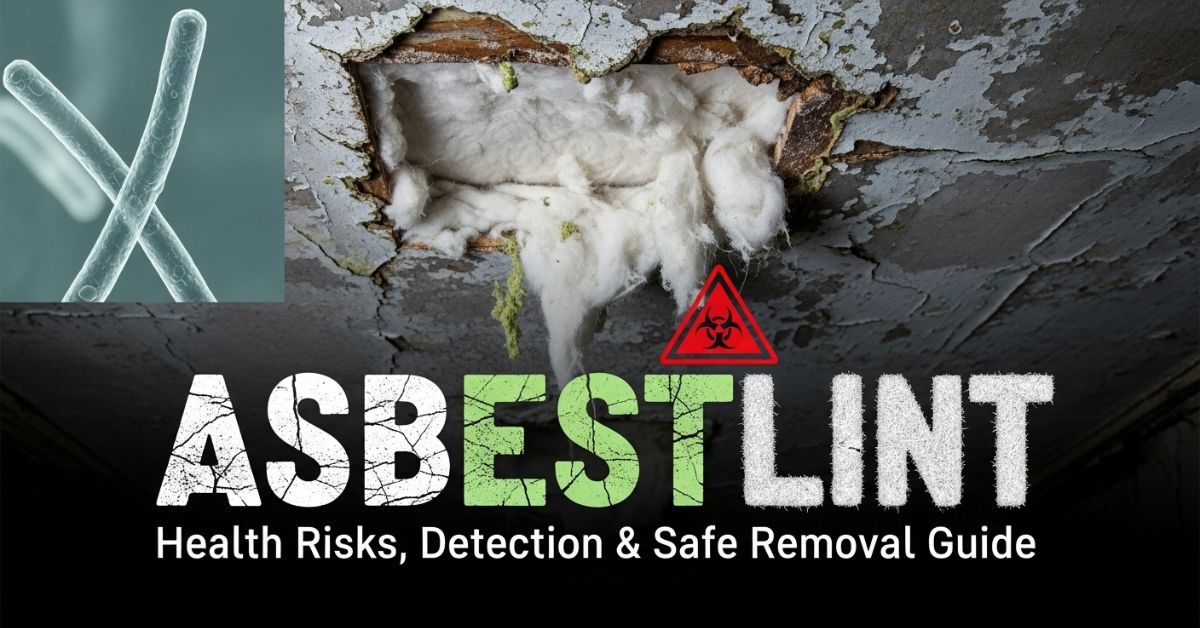
Asbestlint: Health Risks, Detection & Safe Removal Guide
Ever walked through an older building and wondered what’s hiding behind those walls? Last month, a contractor friend started renovating a 1970s home and discovered grey fibrous tape wrapped around every pipe in the basement. That’s asbestlint, and it’s more common than you’d think.
Asbestlint is asbestos-containing tape or ribbon material used for insulation, fireproofing, and sealing in buildings constructed before the 1980s. It consists of woven asbestos fibers that can withstand extreme temperatures but release dangerous microscopic particles when disturbed, causing serious respiratory diseases decades after exposure.
Think of asbestlint as the industrial world’s favorite problem-solver that turned into its biggest nightmare. The name combines “asbestos” with “lint” because of its fibrous, fabric-like texture.
This material came in strips, sheets, or tape form—usually grey or white in color. Manufacturers loved it because asbestos fibers could handle temperatures up to 1000°C without breaking down. You could wrap it around irregular shapes, bend it into tight corners, and it would last for decades without replacement.
The practical applications seemed endless. Builders wrapped it around heating ducts, water pipes, boilers, and steam lines to prevent heat loss. Electricians used it for wire insulation. Auto manufacturers incorporated it into brake pads and exhaust systems. Shipbuilders relied on it extensively because ships face extreme temperature variations.
Here’s what made asbestlint so attractive during its peak from the 1920s through the 1970s: it was cheap to produce, incredibly durable, completely fireproof, and flexible enough for any application. Nobody questioned whether something this useful could also be harmful.
The Health Risks Nobody Saw Coming
I’ve talked with people who worked with asbestlint for years without knowing the danger. The cruel part? The diseases it causes don’t show up right away—they take 20 to 40 years to develop.
Asbestosis happens when inhaled asbestos fibers scar your lung tissue. Over time, this scarring makes breathing progressively harder. You’ll experience chest tightness, persistent coughing, and shortness of breath that gets worse. There’s no cure—only management of symptoms.
Mesothelioma is the disease most closely linked to asbestos exposure. It’s a rare, aggressive cancer affecting the lining of your lungs, abdomen, or heart. By the time symptoms appear, it’s often too late for effective treatment. Even minimal exposure can trigger it decades later.
Lung cancer risk increases dramatically with asbestos exposure, especially if you smoke. The asbestos fibers and cigarette smoke create a compound effect that’s far worse than either alone.
The real tragedy? These fibers are microscopic. You can’t see them floating in the air. You won’t feel them entering your lungs. By the time you realize something’s wrong, the damage has already happened.
Where You’ll Find Asbestlint Today
Buildings constructed before regulations tightened in the late 1980s are the primary concern. If your home or workplace was built before 1980, there’s a reasonable chance asbestlint exists somewhere inside.
Look for it wrapped around pipes in basements, especially heating systems and boilers. Check attic insulation—it might be mixed with other materials. Older furnace ductwork often has asbestlint sealing the joints. Some ceiling tiles and floor materials from that era contain asbestos fibers too.
Industrial settings have even more exposure points. Factories, power plants, shipyards, and refineries used massive amounts of asbestlint for equipment insulation. Workers in these environments faced the highest exposure levels, often without proper protective equipment.
What’s concerning is that asbestlint can still be intact and relatively safe—until someone disturbs it. Renovations, demolitions, or even minor repairs can release those dangerous fibers into the air. That’s when a stable, contained material becomes an active health hazard.
Common Mistakes That Increase Exposure
People make predictable errors when dealing with potential asbestos, and these mistakes can have serious consequences.
Attempting DIY removal tops the list. You might think wearing a dust mask and being careful is enough. It’s not. Professional asbestos removal requires specialized equipment, containment procedures, and disposal protocols that homeowners don’t have access to.
Disturbing materials without testing comes second. That old pipe insulation might look harmless, but cutting into it, sanding it, or removing it releases fibers you can’t see. Always test before you touch.
Ignoring deteriorating materials is surprisingly common. If you’ve got crumbling pipe wrapping or fraying insulation, don’t just leave it there hoping it’ll be fine. Deteriorating asbestlint releases fibers continuously, creating ongoing exposure even without active disturbance.
I’ve also seen people focus only on obvious insulation while missing less apparent sources. Asbestlint isn’t always wrapped around pipes in neat rows—it’s sometimes hidden in joint sealants, beneath flooring, or inside wall cavities.
How to Identify Asbestlint Safely
Here’s the uncomfortable truth: you can’t definitively identify asbestlint just by looking at it. It often resembles harmless fibrous insulation or fabric tape.
Visual clues include frayed or fibrous wrapping on pipes, dusty lint-like residue around heating systems, discolored brittle insulation that crumbles easily, or any ceiling textures applied before 1990. But these are warning signs, not confirmations.
The only reliable identification method involves professional testing. Licensed asbestos inspectors know how to collect samples without releasing dangerous fibers into your space. They use specialized equipment and follow strict containment protocols.
The sample goes to a certified laboratory for analysis. Technicians examine it under microscopes to identify asbestos fibers and determine the percentage present. You’ll get a detailed report specifying exactly what type of asbestos was found and at what concentration.
Never attempt to collect samples yourself. The moment you disturb asbestlint to get a sample, you’ve already created the exposure risk you’re trying to avoid. It’s worth paying for professional inspection rather than gambling with your health.
Safe Removal and Management Practices
If testing confirms asbestlint presence, you’ve got two main options: removal or containment. The right choice depends on the material’s condition and location.
Professional removal makes sense when asbestlint is deteriorating, you’re planning major renovations, or the material is in areas where it’ll be frequently disturbed. Licensed abatement contractors seal off the work area completely, use negative air pressure systems to prevent fiber escape, and wear full protective gear including respirators.
The removed material gets sealed in special containers and disposed of at approved facilities—you can’t just throw it in a regular dumpster. After removal, the area undergoes air quality testing to confirm it’s safe.
Encapsulation works when asbestlint is in good condition and won’t be disturbed. Professionals apply special sealants that lock the fibers in place, preventing them from becoming airborne. This costs less than removal and can be effective for decades if done properly.
Enclosure involves building a permanent barrier around the asbestlint without touching it. This might mean constructing a new wall in front of old insulation or boxing in pipes with metal covers.
Whatever approach you choose, hire certified professionals. Most regions require specific licensing for asbestos work, and reputable contractors carry insurance specifically for asbestos-related claims.
Legal Requirements and Regulations
Laws surrounding asbestos vary by location, but most developed countries have strict regulations you can’t ignore.
In many jurisdictions, property owners must disclose known asbestos presence when selling or renting. Failure to disclose can result in lawsuits and financial penalties. If you’re buying older property, explicitly ask about asbestos testing and get documentation.
Workplace regulations are even stricter. Employers must protect workers from asbestos exposure through proper training, protective equipment, air monitoring, and medical surveillance programs. Construction and renovation projects involving asbestos often require permits and inspections.
Disposal regulations prohibit mixing asbestos waste with regular trash. Special handling, packaging, and designated disposal sites are mandatory. Violating these rules can result in significant fines.
If you’ve suffered health consequences from asbestos exposure, legal options exist. Many countries have compensation programs for workers exposed on the job. Lawsuits against manufacturers, employers, or building owners who failed to protect people from asbestos are common, though they can take years to resolve.
Document everything—medical records, employment history, property records—because proving exposure that happened decades ago requires substantial evidence.
Modern Alternatives That Actually Work
The good news? We’ve developed excellent alternatives that provide similar benefits without the health risks.
Fiberglass insulation offers comparable heat resistance and costs less than asbestos ever did. It’s now the standard for most insulation applications and comes in various forms for different uses.
Mineral wool (also called rock wool) provides superior fire resistance and sound absorption. It’s made from natural minerals heated and spun into fibers that don’t pose the same health risks as asbestos.
Cellulose fibers made from recycled paper products work well for certain insulation needs. They’re treated with fire retardants and offer good thermal performance while being environmentally friendly.
Silicone-based compounds excel in high-temperature sealing applications where asbestlint was once the only option. They’re flexible, durable, and completely non-toxic.
For specialized industrial applications, ceramic fiber blankets withstand extreme temperatures without containing asbestos. They’re used in furnaces, kilns, and other high-heat environments where performance can’t be compromised.
The transition away from asbestos has proven that safety and performance aren’t mutually exclusive. Modern alternatives often perform better while eliminating health risks entirely.
What Property Owners Need to Know
If you own or manage older buildings, asbestlint is your responsibility whether you knew about it or not.
Start with a professional asbestos survey, especially before any renovation or demolition work. This assessment identifies where asbestos materials exist and evaluates their condition. You’ll get a management plan outlining how to handle what’s found.
Maintain detailed records of all asbestos testing, abatement work, and management decisions. These documents protect you legally and help future owners or tenants understand what they’re dealing with.
Regular inspections of known asbestos materials help catch deterioration early. If that pipe wrapping starts fraying, you want to know immediately rather than discovering it after fibers have been floating around for months.
Educate anyone who might work on the property—maintenance staff, contractors, even DIY-inclined tenants. Make sure they understand which materials contain asbestos and that these areas are off-limits without professional involvement.
Budget for eventual asbestos abatement. Whether you remove it now or later, it’s coming out eventually. Planning for this expense prevents rushed decisions when renovations or emergencies force your hand.