Chameleónovité: Masters of Adaptation
hameleónovité attract sustained global interest because they challenge how people understand animals, perception, and adaptation. Searches for this term usually come from a desire to move past surface-level facts and understand how these reptiles truly function, biologically and ecologically. Their abilities appear extraordinary, yet every feature has a precise evolutionary explanation.
Understanding chameleónovité matters because they represent one of the most specialized reptile lineages on Earth. They reveal how anatomy, behavior, and environment can align so tightly that even small disruptions threaten survival.
Table of Contents
ToggleWhat chameleónovité actually are
Chameleónovité is the scientific family name for chameleons, a group of reptiles within the order Squamata. This family includes numerous species that share a distinct structural and functional blueprint shaped by life in complex, three-dimensional habitats.
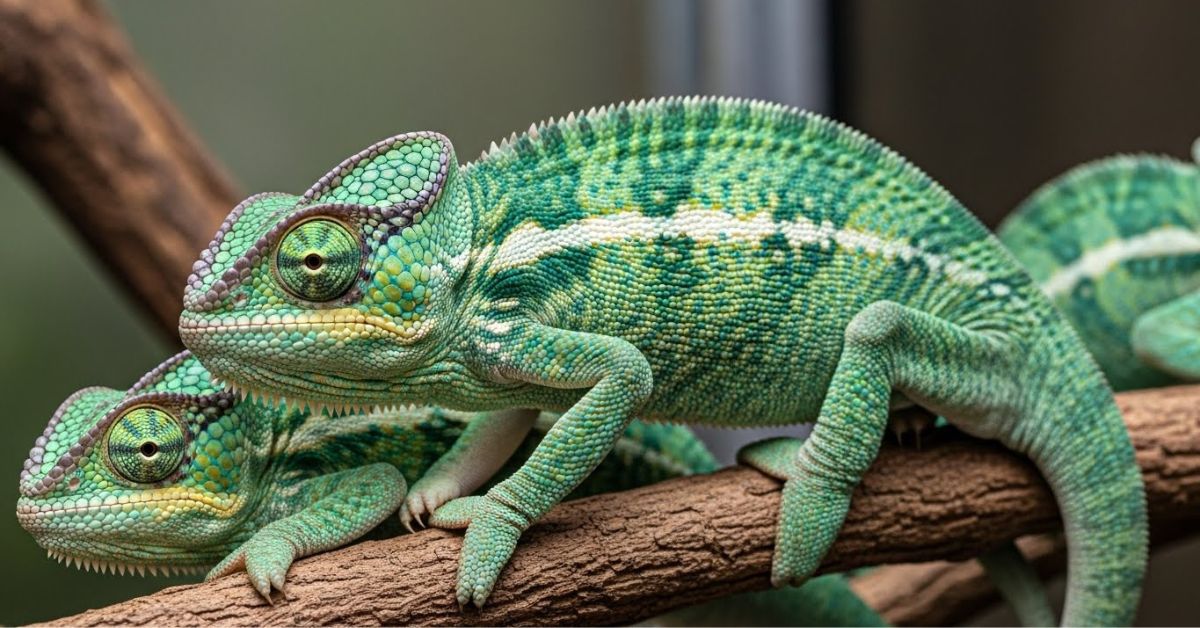
They are not simply “color-changing lizards.” Chameleónovité are defined by a combination of traits: independently moving eyes, a highly specialized tongue mechanism, grasping limbs, and advanced visual processing. These characteristics work together as a system, not as isolated curiosities.
Importantly, chameleónovité are not uniform. Species vary widely in size, coloration, habitat preference, and behavior. What unites them is not appearance alone, but a shared evolutionary strategy focused on precision, control, and efficiency.
Evolutionary specialization rather than general adaptation
Designed for slow, deliberate movement
Unlike many fast-moving lizards, chameleónovité evolved for controlled, calculated motion. Their slow, rocking gait reduces visual detection by predators and prey alike. This movement pattern mimics swaying vegetation, blending behavior with environment rather than relying solely on color.
Their skeletal structure supports this strategy. Strong limb joints and a laterally compressed body allow balance on narrow branches where speed would be dangerous rather than beneficial.
Limbs built for gripping, not running
Each foot is divided into two opposing bundles of toes, forming a natural clamp. This configuration provides stability rather than speed. Combined with sharp claws, it allows secure anchoring on uneven surfaces.
The tail, in most species, is fully prehensile. It functions as an anchor point, enabling the animal to reach forward without losing balance. This five-point contact system is rare among reptiles and central to the chameleónovité way of life.
Vision as the dominant sense
Independent eye movement explained
The eyes of chameleónovité are enclosed in muscular cones, leaving only a small opening for the pupil. Each eye can rotate independently, scanning different parts of the environment simultaneously. This allows constant monitoring without head movement.
This is not confusion or multitasking. It is a surveillance system designed to minimize motion while maximizing awareness.
Depth perception on demand
When prey is detected, both eyes lock onto the same target. This creates precise depth perception, allowing accurate distance calculation. The transition from independent scanning to synchronized focus is nearly instantaneous.
This visual system directly supports their feeding mechanism, where misjudging distance by even a small margin would result in failure.
Color change: function, not illusion
Why chameleónovité change color
Color change in chameleónovité is often misunderstood as camouflage alone. In reality, it serves multiple purposes: communication, thermoregulation, stress signaling, and social interaction.
A darker color may indicate increased body temperature absorption, while brighter or contrasting patterns can signal dominance, aggression, or reproductive readiness.
How the mechanism works
The skin contains layered cells that manipulate light rather than pigment alone. By adjusting the spacing of microscopic structures, the skin reflects different wavelengths of light. This physical process allows rapid, reversible color shifts without producing new pigments.
Because this mechanism is metabolically demanding, color change is used strategically, not continuously.
The tongue as a biomechanical system
Speed and structure
The tongue of chameleónovité is longer than their body and can be projected with extreme acceleration. This is achieved through elastic energy storage rather than muscle strength alone.
Muscles load energy into connective tissue, which then releases it explosively. This allows rapid projection without requiring large muscle mass.
Precision over force
At the tip of the tongue is a textured, adhesive pad that conforms to the shape of the prey. The goal is not impact force, but secure attachment. Once contact is made, the tongue retracts immediately, pulling the prey into the mouth.
This system allows feeding without lunging or repositioning the body, preserving balance and concealment.
Behavior shaped by energy efficiency
Solitary by necessity
Most chameleónovité are solitary not by temperament, but by ecological constraint. Their feeding strategy and slow metabolism do not support competition or group living.
Encounters with others are brief and highly ritualized. Visual signals replace physical conflict, conserving energy and reducing injury risk.
Visual communication instead of sound
Chameleónovité rarely vocalize. Communication relies on posture, body inflation, color patterns, and subtle movement. These signals are unambiguous within the species and reduce the need for prolonged interaction.
This reliance on visual language reflects their advanced visual system and reinforces the importance of sight in every aspect of their life.
Habitat dependence and geographic distribution
Chameleónovité are primarily found in Africa and nearby regions, occupying environments ranging from humid forests to dry scrublands and mountainous areas. Despite this variety, all species depend on structural vegetation rather than open ground.
Their survival is tied not only to climate but to plant architecture. The loss of layered vegetation directly removes their living space, hunting platforms, and escape routes.
This dependence makes them highly sensitive to environmental change, even when temperature and rainfall remain stable.
Ecological role and balance
Chameleónovité function as precision insect regulators. They target individual prey rather than consuming large quantities indiscriminately. This helps maintain balance within insect populations without destabilizing ecosystems.
They also serve as indicators of environmental health. Because they are sensitive to habitat structure and microclimate, changes in chameleon populations often signal deeper ecological disruption.
Their presence reflects stability, complexity, and continuity within an ecosystem.
Common misconceptions clarified
One widespread misconception is that chameleónovité constantly change color to match their surroundings. In reality, most color changes are responses to internal states rather than external backgrounds.
Another misunderstanding is that they are fragile or weak. While slow-moving, they are highly specialized and resilient within suitable environments. Their vulnerability arises not from biological weakness, but from ecological specificity.
Understanding these distinctions is essential to appreciating their true nature.
Conservation relevance without alarmism
Chameleónovité are not universally endangered, but many species face increasing pressure from habitat alteration. Because their needs are specific, recovery is slow once populations decline.
Protection of chameleónovité does not require extraordinary measures. It requires preserving structurally complex habitats and minimizing disruption to vegetation layers.
Their conservation aligns naturally with broader ecosystem preservation efforts.
Conclusion
Chameleónovité are not defined by spectacle, but by precision. Every aspect of their biology reflects a deliberate balance between control, efficiency, and specialization. Their eyes, limbs, tongue, and skin form an integrated system shaped by millions of years of adaptation.
Understanding chameleónovité means moving beyond myths and recognizing them as examples of evolutionary refinement rather than novelty. Their significance lies not in how unusual they appear, but in how perfectly they function within their ecological niche.
FAQs
What does chameleónovité mean?
It is the scientific family name for chameleons, grouping species with shared anatomical and behavioral traits.
Do chameleónovité change color to camouflage?
Sometimes, but color change is mainly used for communication, temperature control, and signaling internal states.
Why do their eyes move independently?
Independent eye movement allows constant environmental scanning without body movement, reducing detection risk.
Are all chameleónovité tree-dwelling?
Most are arboreal or semi-arboreal, relying on vegetation structure rather than open ground.
What makes chameleónovité vulnerable to habitat loss?
They depend on specific plant structures and microclimates, making adaptation to altered environments difficult.
You might also like Crunchnews.co.uk