Insoya: Meaning, Use, and Context
People search for this topic because the term appears in product names, ingredient lists, discussions, and technical contexts without a clear explanation. The lack of clarity creates confusion, especially when accuracy matters for understanding use, safety, or relevance.
This article removes that confusion by explaining the concept from the ground up, using plain language and careful reasoning.
Table of Contents
ToggleWhat insoya actually is
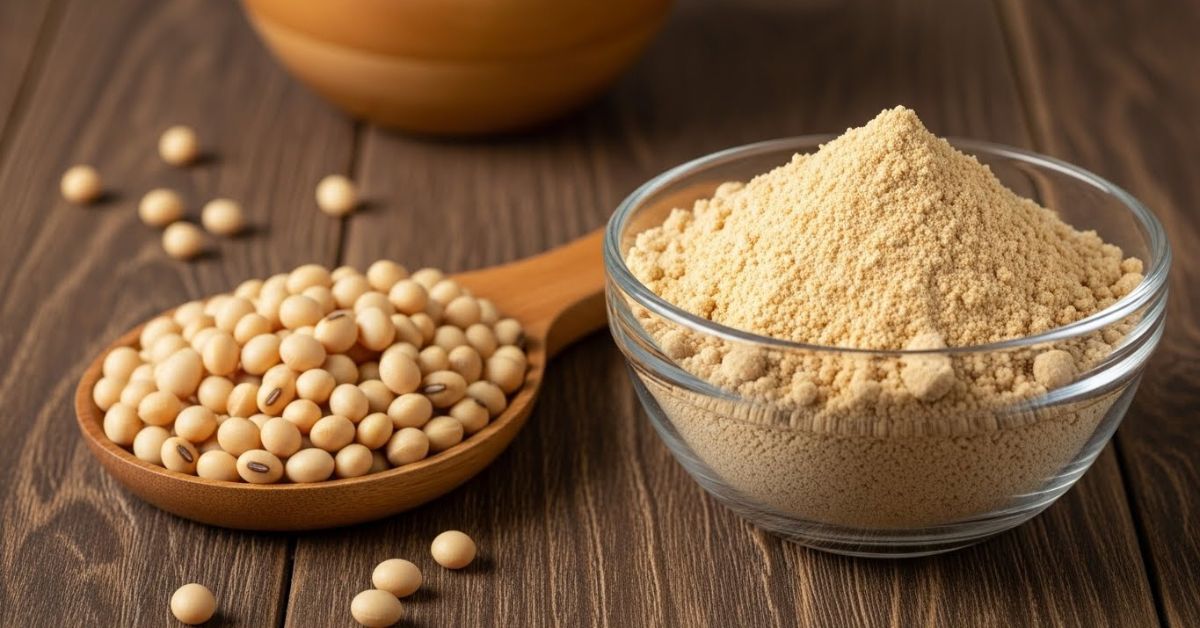
Insoya is a term commonly used to describe a soy-based derivative or formulation designed for functional use rather than raw consumption. It is not a single universal substance with one fixed definition. Instead, it functions as a category label applied to processed soy components that are modified for specific purposes.
The key point is that insoya refers to how soy is prepared and applied, not merely to soy itself. The processing alters structure, solubility, texture, or stability so the final material behaves differently from whole soybeans or basic soy flour.
This distinction matters because many misunderstandings come from assuming the term describes raw soy, which it does not.
How insoya differs from basic soy products
Processing level
Basic soy products, such as beans or minimally milled flour, retain most of their original structure. In contrast, insoya is processed to achieve targeted performance. This processing may involve separation, refinement, or controlled modification.
Functional intent
Standard soy foods focus on nutrition or flavor. Insoya focuses on function. That function could be binding, emulsifying, stabilizing, or improving texture depending on how it is formulated.
Predictability
One reason these formulations exist is consistency. Raw soy varies by crop and region. Insoya-based materials are engineered to behave the same way every time, which is essential in industrial or technical applications.
Common contexts where the term appears
Food formulation
In food-related contexts, the term often appears in ingredient declarations or technical descriptions. Here it usually indicates a processed soy component added to improve structure, mouthfeel, or shelf stability rather than to serve as a primary ingredient.
Manufacturing and processing
Outside food, the label may appear in manufacturing documentation where soy-based compounds are used as biodegradable or plant-derived alternatives to synthetic materials.
Consumer research and labeling
People also encounter the term when researching product composition. The unfamiliar wording leads to searches aimed at understanding origin, safety, or purpose.
Why the definition is often unclear
The ambiguity comes from three factors.
First, the term is not governed by a single global standard. Different industries may use it slightly differently while keeping the same core idea.
Second, it is frequently used in technical documentation rather than consumer-facing explanations. That limits accessible definitions.
Third, many summaries oversimplify it by equating it directly with soy, which removes the most important distinction: functional processing.
Key characteristics of insoya-based materials
Plant-derived origin
All legitimate uses of the term trace back to soy as a plant source. This makes it part of a broader shift toward plant-based and renewable materials.
Modified structure
Processing changes how the material behaves. Proteins may be isolated or rearranged, carbohydrates refined, or fats adjusted to meet specific requirements.
Neutral base
In many applications, the goal is minimal flavor or interference. The material is designed to support other components rather than dominate them.
Controlled performance
Consistency is a defining feature. The material is engineered to perform reliably under defined conditions such as heat, moisture, or mechanical stress.
Safety and general considerations
Safety depends on context, formulation, and regulation rather than the name itself. A processed soy derivative is evaluated based on its final properties, not just its source.
For people concerned about sensitivities, it is important to understand that processing can reduce, but not always eliminate, naturally occurring compounds. This is why clear labeling and technical documentation matter.
From an environmental perspective, plant-derived materials are often examined for sustainability benefits, but those benefits depend on sourcing and processing efficiency rather than assumptions.
Misconceptions that cause confusion
“It is just another word for soy”
This is incorrect. The term signals processing and functional intent, not raw composition.
“It always means food”
Also incorrect. While common in food contexts, the term can appear in non-food applications.
“All versions are identical”
Because there is no single formulation, properties can vary significantly depending on use.
How to interpret the term when you encounter it
When you see the word used in a product or document, focus on context rather than the label alone.
Ask three practical questions:
-
What function is it serving?
-
In what environment is it used?
-
Is it described as an ingredient, a material, or a component?
These questions provide more clarity than searching for a one-line definition.
Broader relevance and future use
The growing interest in plant-based materials has increased the visibility of processed soy derivatives. As industries seek renewable and adaptable inputs, these formulations become more common.
That trend explains why search interest continues to grow. People encounter the term more often and want a clear, reliable explanation without marketing language or technical overload.
Conclusion
Insoya is best understood as a functional, processed soy-based category rather than a single substance. Its meaning depends on how it is formulated and why it is used. Confusion arises when the term is treated as synonymous with raw soy or when context is ignored.
A clear understanding comes from focusing on function, processing, and application. With that perspective, the term becomes practical and understandable instead of vague or misleading.
FAQs
What does insoya mean in simple terms?
It refers to a processed soy-based material designed for specific functional use.
Is insoya the same as soy protein?
No. Some versions may include protein, but the term is broader and function-focused.
Why is insoya used instead of raw soy?
Processing provides consistency, stability, and predictable performance.
Is insoya always related to food products?
No. It can also appear in non-food or industrial contexts.
Does insoya have one fixed definition worldwide?
No. Its meaning varies slightly by industry and application.